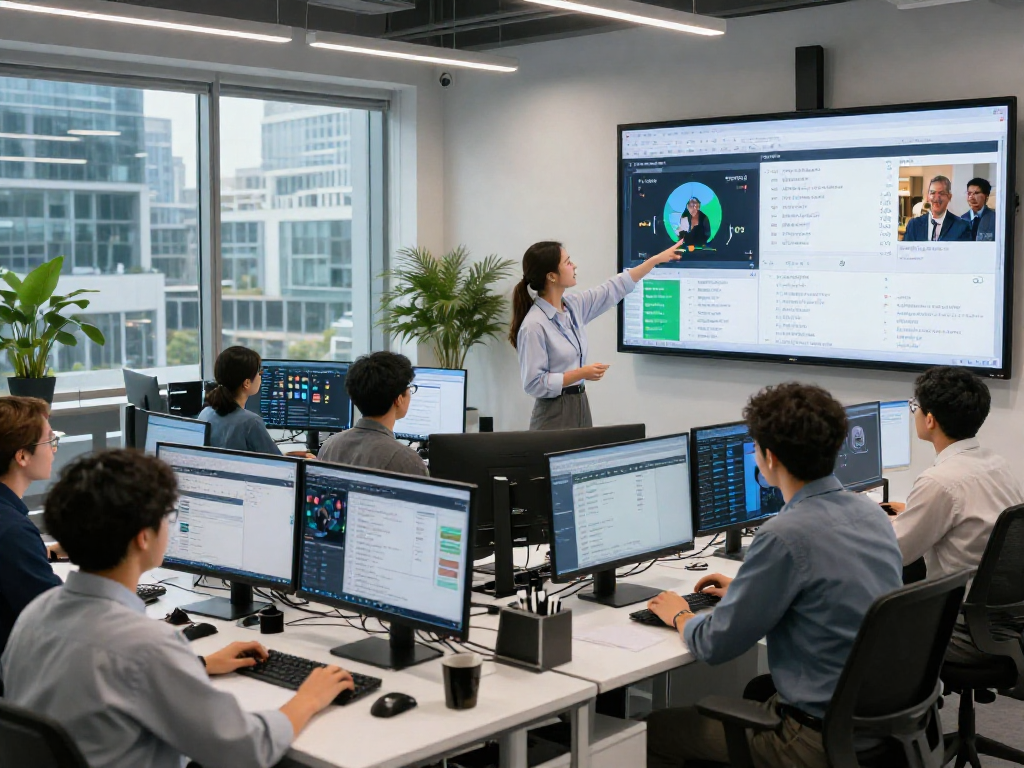
AI gives city robots more ways to read their surroundings and choose their next action. That matters when a robot must work around people, traffic, weather, blocked paths, and changing access rules.
Quick read
- Camera and sensor data can help a robot spot people, objects, and open paths.
- Software can change a route or task when conditions shift.
- Human review, clear limits, and safe stop controls still matter.
From fixed routes to local decisions
A basic autonomous robot can follow a mapped route. An AI system can compare fresh sensor data with that map, then adjust its path when a gate is closed, a vehicle blocks the lane, or a crowd fills the walkway.
That process starts with perception. Cameras, LiDAR, microphones, and other sensors collect information about the area around the robot. AI software sorts that information into useful labels, such as person, curb, bicycle, doorway, or unknown object.
The robot then turns those labels into an action. It may slow down, stop, take another route, or ask a remote operator for help. The choice depends on the robot’s task and the safety rules set by its maker or city operator.
Where the work can change
Street-cleaning robots could use sensors to find litter instead of following the same path at set times. Inspection robots could compare new images with earlier ones and send a worker to review a possible change on a bridge, road, or public building.
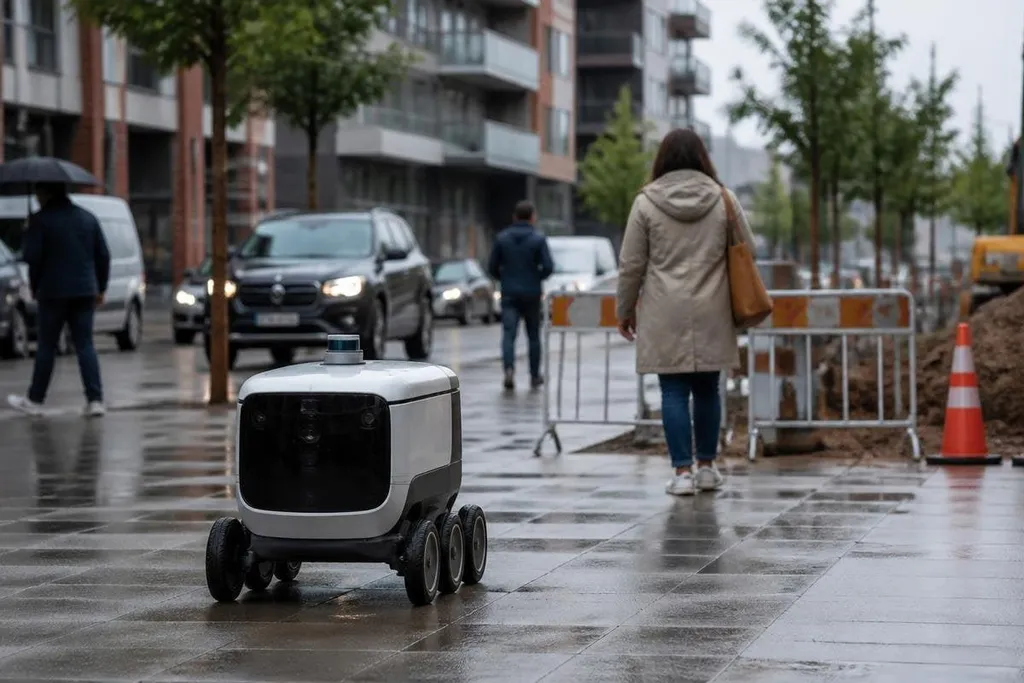
Delivery robots could use local decisions to handle blocked sidewalks and temporary barriers. Security robots could flag an unusual event for a person to check, but a flag is not proof that anything unlawful happened.
That distinction matters. AI can sort and rank sensor data, yet people still need to decide what a warning means and what action should follow.
A system that sends every uncertain case to a worker may create too much manual work; one that sends too few cases may miss a real hazard.
A city buyer needs the task, location, test date, sensor, and human review step behind an AI decision. Robot24.com city robotics coverage can place those facts beside the machine before the article turns to edge cases.
The hard part is the edge case
A robot may work well on a clear path and struggle when the same path has glare, rain, roadworks, or a group of people moving in different directions. Training data can help the software recognize more conditions, but it cannot remove the need for checks in the places where the robot will run.
AI also needs a way to handle uncertainty. If the camera sees an object it cannot identify, the robot should slow down or stop rather than guess. That response costs time, but a wrong guess near a cyclist or child can cost much more.
Privacy adds another limit. Cameras and microphones can collect information about people who never agreed to take part in a robot trial. Operators need clear rules for what the robot records, how long it keeps that data, and who can view it.
Connectivity matters too. A remote operator may help when the robot gets stuck, but a weak network can delay that help. The robot needs a safe local response for the gap between a problem and human review.
A practical check before a city trial
A city team can use this list before buying or testing an AI-enabled robot:
- Define the task in one sentence, including the place, hours, and people nearby.
- List the objects and events the robot must identify before it can move.
- Set the stop rule for blocked paths, uncertain sensor data, lost network service, and low battery.
- Check who reviews alerts and how fast they must respond.
- Record what data the robot stores, where it goes, and when deletion happens.
- Test the robot in rain, glare, crowds, roadworks, and other conditions found at the site.
The last point can change the purchase decision. A robot that handles a clean demonstration route may need extra sensors, slower speeds, or more human help on a public street.
What happens next
The useful test for smart city AI is narrow: can the robot complete one defined task, in one defined place, while handling uncertainty safely? Cities should start there, measure stops and human interventions, and expand only when those numbers hold across the conditions the robot will meet.